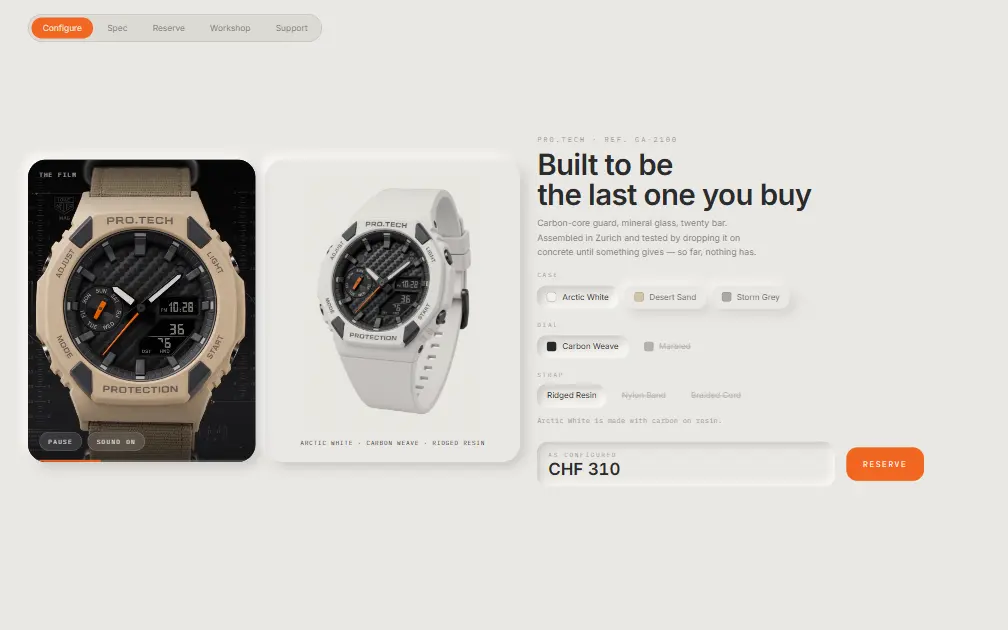
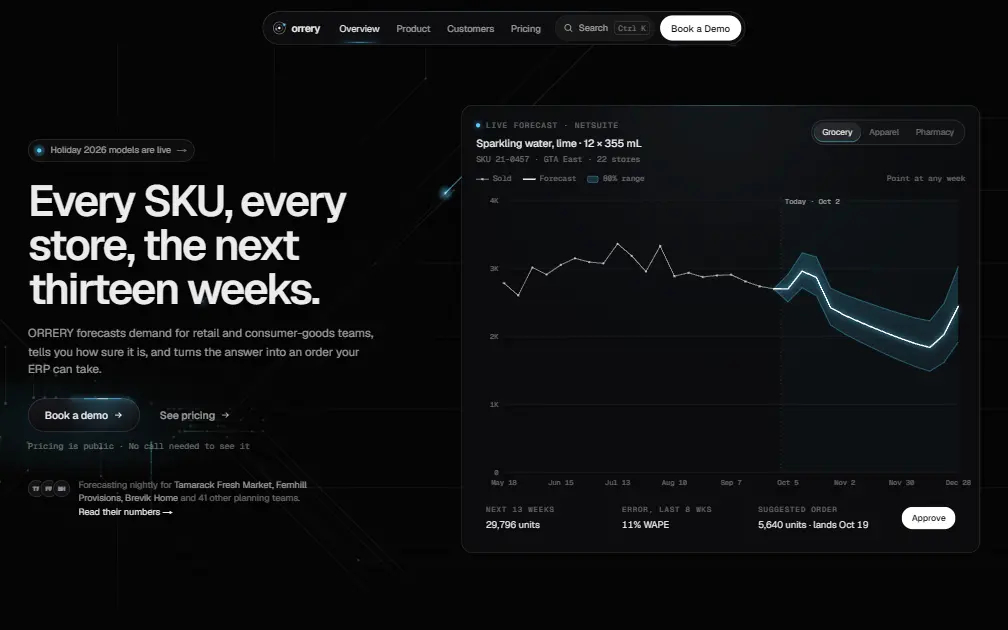
The example: LYDHUS, a loudspeaker maker in Copenhagen
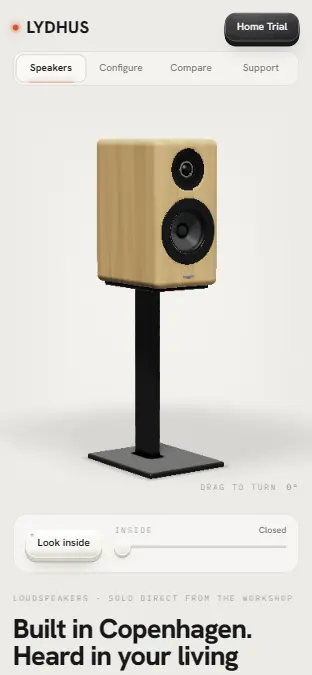
LYDHUS is a loudspeaker maker in Copenhagen we invented to show what we build for this trade — every page above works. Spatial 3D · a real-time object you can turn in your hand.
What a Shopify website has to do
A shopper deciding on an expensive physical product online is guessing at the size, the finish, how it will look in their room and whether they chose the right one. Every guess they get wrong is a return, and every guess they will not make is a sale lost to whoever is cheaper. A theme with a photo carousel and an “Add to cart” button leaves all the guessing to them.
So a store for a considered product has to answer what a showroom would: let the shopper turn the thing over, change its finish and see the price follow, tell them which model fits their room, and make trying it at home safe enough to say yes.
That is what we build on Shopify for direct-to-consumer brands with a catalogue — audio, furniture, equipment. LYDHUS, above, is the example: a Copenhagen loudspeaker maker whose speaker is drawn live in the page, turned by hand and taken apart, whose configurator reprices with the wood, and whose comparison recommends a model for your room.
Shopify reports that shoppers who viewed a product as a 3D model were 44% more likely to add it to their cart.
Source: Shopify, 202617% of US online shoppers have abandoned an order because the checkout was too long or complicated.
Source: Baymard Institute, 2025
- 01
The product, in the shopper’s hands
A real-time 3D product they can turn, open and look inside, not a photograph on a carousel. Nothing else online comes as close to picking it up.
- 02
A configurator with the price following
Model, finish, colour and extras, chosen on the product itself, with the price and the delivery time updating as they choose.
- 03
A finder that picks the right one
A few questions about the shopper’s space or use, and the store recommends a model and says why. The right first choice is the return you never process.
- 04
Specs side by side
Every model compared on the numbers that matter, drawn to the same scale, with the recommended one lit.
- 05
A trial that removes the risk
Home trial or returns terms laid out night by night, with the delivery date worked out from the postcode, so the guarantee reads as a plan, not small print.
- 06
Support that prevents the return
Set-up help built into the store — where to place it, what to connect it to — because a product set up badly gets sent back.
The example, page by page
01Speakers
The speaker drawn live: drag to turn it, switch the model to watch it grow, and take it apart with its parts labelled.
02Configure
Finish, grille and stands chosen on the speaker itself, with the price and the build time following.
03Compare
Your room’s size and seat distance, a floor plan drawn to scale, and the model that suits it.
04Home Trial
Thirty nights on a dial, then delivery and trial dates worked out from your postcode.
05Support
A placement planner for spacing and toe-in, answers to the common questions, and a set-up call.
Full-price orders that stay sold
Built to sell at full price online, with returns kept low. A buyer who has turned the speaker, matched it to their room and read the trial terms buys the right one the first time.
How we build it
- Days 1–4
Your catalogue
Products, variants, finishes, prices, stock and the shipping and returns rules.
- Days 5–14
The store
The 3D product, the configurator, the finder and every page, designed as Shopify sections your team can rearrange.
- Days 15–20
Live
Checkout, shipping, returns and the trial connected, tested with real orders, and launched.
What a Shopify website costs
$5,600–$8,000
16–20 days to live · fixed price, agreed before we start · branding included
What moves the price
- How many products and variants
- A real-time 3D product and configurator
- A model finder or comparison
- Trial, returns and subscriptions logic
After launch, hosting, uptime, security and monthly reporting run from $250 a month: a monthly retainer, never a contract term.
Without a 3D product, a Shopify store with a configurator and finder sits at the lower end of the range.
Questions we get asked
How much does a Shopify website cost?+
Ours run from $5,600 to $8,000, fixed and agreed before we start. The range is set by the size of the catalogue and whether the store carries a real-time 3D product, a configurator and a finder.
How long does it take?+
Sixteen to twenty days from the first call to live, including test orders through checkout, shipping and returns before launch.
Is the store built on Shopify itself?+
Yes. Products, variants, prices, stock, checkout and payments all run on Shopify. The 3D product, the configurator and the finder are built as sections of your theme, so they read your products and your team can move them around.
Does 3D really sell more?+
For products people want to inspect before paying, letting them turn the product over answers questions a photo cannot, and fewer unanswered questions means fewer returns. We only put 3D where it does that job.
Can you move our existing store?+
Yes. We move products, customers and order history across from your current platform or theme, and keep your URLs redirecting so search rankings follow.
Is LYDHUS a real brand?+
No. LYDHUS is a Copenhagen loudspeaker maker we invented to show what we build on Shopify. The speaker, the configurator and the finder work as a design you can try; the basket, checkout and trial are what we connect to your store at build.