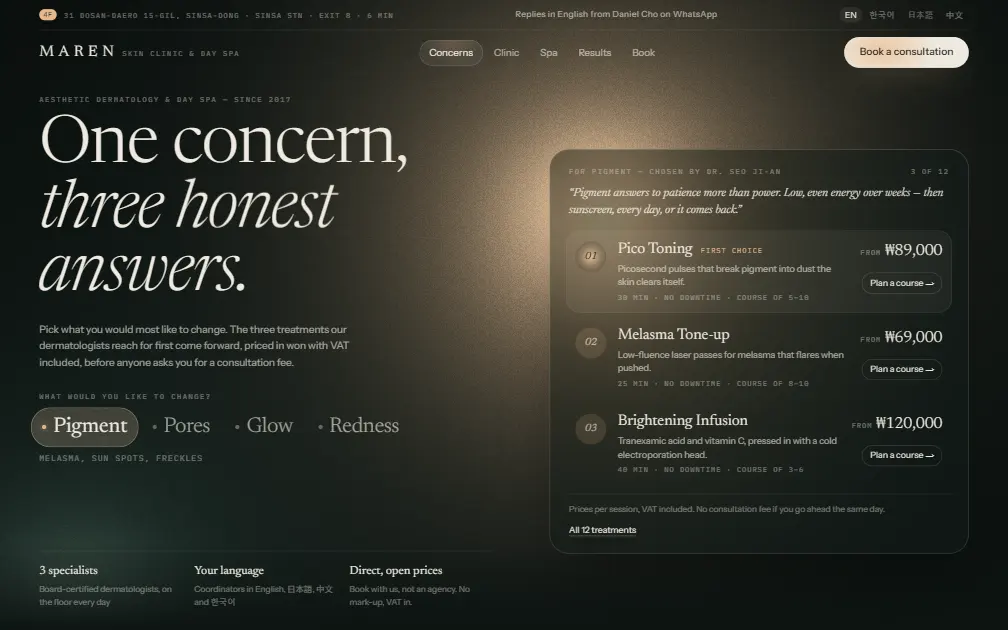
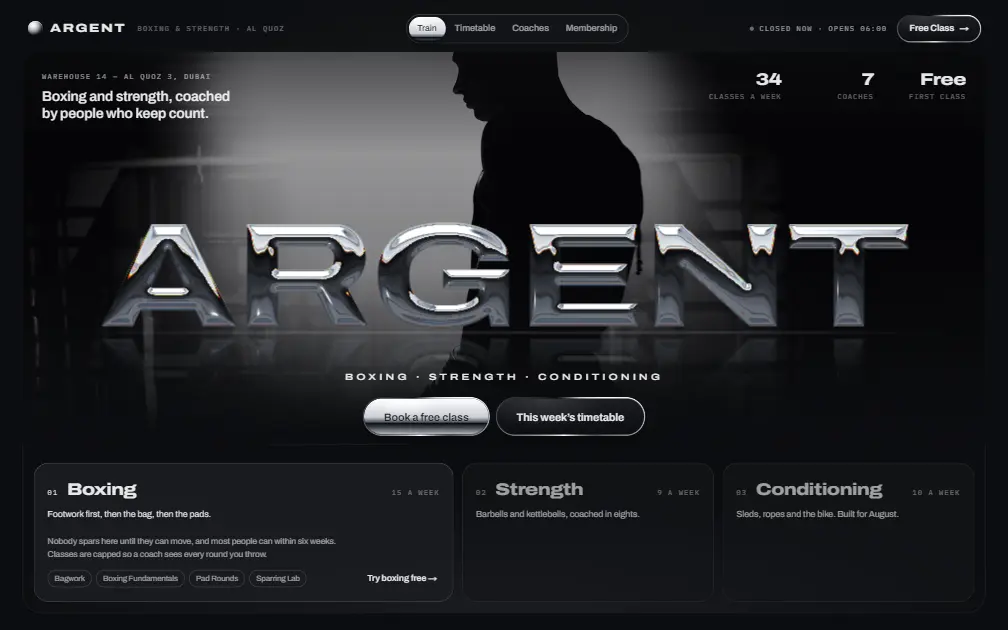
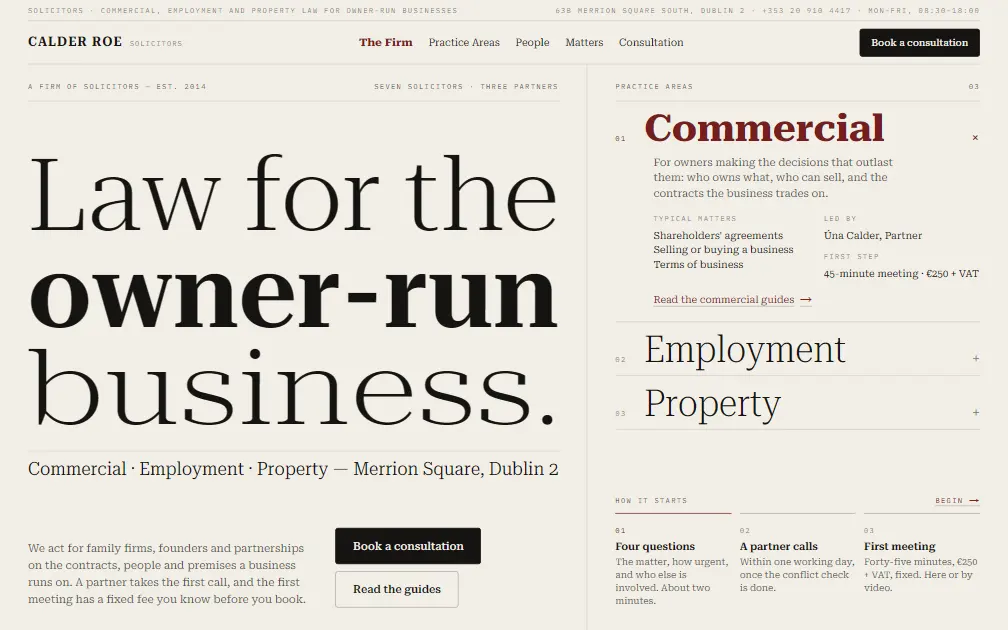
The example: PLAIN DENTAL, a dental studio in Stockholm
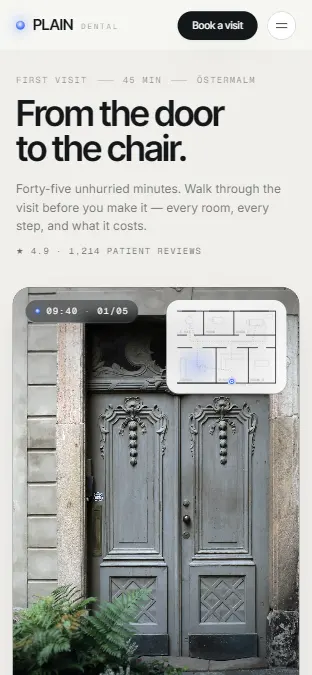
PLAIN DENTAL is a dental studio in Stockholm we invented to show what we build for this trade — every page above works. Modern minimal · warm white, one blue light, scroll that scrubs like film.
What a dental website has to do
Someone looking for a new dentist usually has three practices open in three tabs. They compare what a check-up costs, who speaks their language and how soon they can be seen, and they book with whichever practice answers all three first. The one that makes them ring to find out has usually lost them before the phone rings.
A dental website has a handful of jobs: make the first visit feel familiar before it happens, explain treatments in plain words, put the prices in the open, show who will be in the room, and take the booking, with a waitlist behind it so a cancellation fills itself.
That is what we build for dental practices, orthodontists and private clinics. PLAIN DENTAL, above, is the example: a Stockholm practice whose site walks a first visit from the door to the chair, prices every treatment beside the national reference price, and books in three taps.
Nearly 70% of dental patients compare two to five practices before choosing one; only 20% look at a single practice.
Source: MyAdvice Dental Patient Survey, 2024 (n=450)Asked what makes a dentist’s website trustworthy, the top answer, at 51%, was that it was easy to get in touch or book an appointment.
Source: MyAdvice Dental Patient Survey, 2024Sweden’s official price comparison finds up to 10,000 kronor difference for the same treatment in the same city.
Source: TLV, Tandpriskollen, 2025
- 01
The first visit, walked through
A new patient sees the door, the reception, the room and the chair before they arrive, with the next free slot pinned to the screen the whole way.
- 02
Treatments by what hurts
Tap a tooth or a concern and see what it usually needs, how long it takes and what it costs, explained the way you would explain it in the chair.
- 03
Prices in the open
Every treatment priced, beside the reference price where your country publishes one, with the subsidy or insurance worked out.
- 04
The dentist, before the appointment
Every dentist and hygienist with their languages and what they focus on, so a nervous patient can choose who they see.
- 05
Booking in three taps
Treatment, time, name. The patient books without a phone call, and reception sees it in the diary like any other appointment.
- 06
A waitlist that refills the chair
When someone cancels, the slot is offered to the next patient who asked for an earlier one, so a cancellation does not become an empty hour.
The example, page by page
01First Visit
The first visit as a scroll from the street door to the chair, with the next free new-patient slot pinned to the screen.
02Treatments
A tooth chart you tap: each concern opens what it usually needs, how long it takes, and the price it starts at.
03Prices
The full price list beside the national reference prices, and a calculator for what the dental subsidy takes off.
04Team
Every dentist with their languages and focus, so a patient can pick who they see.
05Book
Three taps from treatment to booked, with a waitlist that offers the next cancellation.
New patients who book themselves
Built to turn price-checkers into booked new patients. Prices in the open answer the question people otherwise ring to ask, and a waitlist refills the slot a cancellation would have left empty.
How we build it
- Days 1–2
Your practice
Treatments, prices, the team and the rules your diary runs on: who sees new patients, and how long each appointment takes.
- Days 3–8
The pages
Every page designed and written, with the motion that walks a first visit through.
- Days 9–13
Live
Booking, reminders and the waitlist connected to your practice system, tested on real slots, and launched.
What a dental website costs
$3,400–$4,800
10–13 days to live · fixed price, agreed before we start · branding included
What moves the price
- How many dentists and treatments
- Booking connected to your practice system
- Prices with subsidy or insurance worked out
- More than one language
After launch, hosting, uptime, security and monthly reporting run from $250 a month: a monthly retainer, never a contract term.
Questions we get asked
How much does a dental website cost?+
Ours run from $3,400 to $4,800, fixed and agreed before we start. Where in that range depends on how many dentists and treatments there are, whether booking connects to your practice system, and how many languages the site speaks.
How long does it take?+
Ten to thirteen days from the first call to live. Agency quotes for a dental site usually run to several weeks or months; most of that is waiting, and we do not build in waiting.
Can patients book with the system we already use?+
Usually, yes. We connect the booking to the system your diary already runs on, so a new patient lands in it like any other appointment. Where a system has no way in, we build the booking as a request your reception confirms.
Should we really put our prices on the website?+
We think so. Patients compare practices on price, and a practice that hides its prices gets the call only to be asked for them. Where your country publishes reference prices, showing yours beside them says you have nothing to hide.
Will it help us get found on Google?+
Every page is built to be read by search engines: fast, with your treatments, prices and practice details in the structured form Google reads. For a practice, reviews and your Google Business Profile move rankings most, and the site links to both.
Is PLAIN DENTAL a real practice?+
No. PLAIN DENTAL is a Stockholm practice we invented to show what we build for dentists. Every page works as a design you can try; the slots, the prices and the booking are what we connect to your practice at build.
Do you write the words?+
Yes, from a call with you and whoever runs reception. You check every word before launch, and the treatments and prices stay yours to edit.