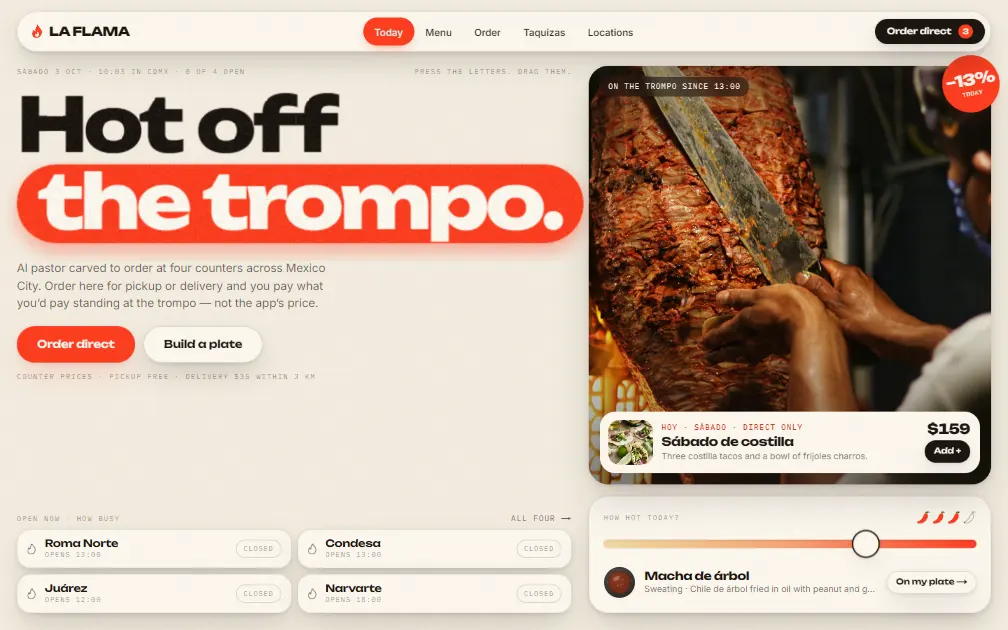
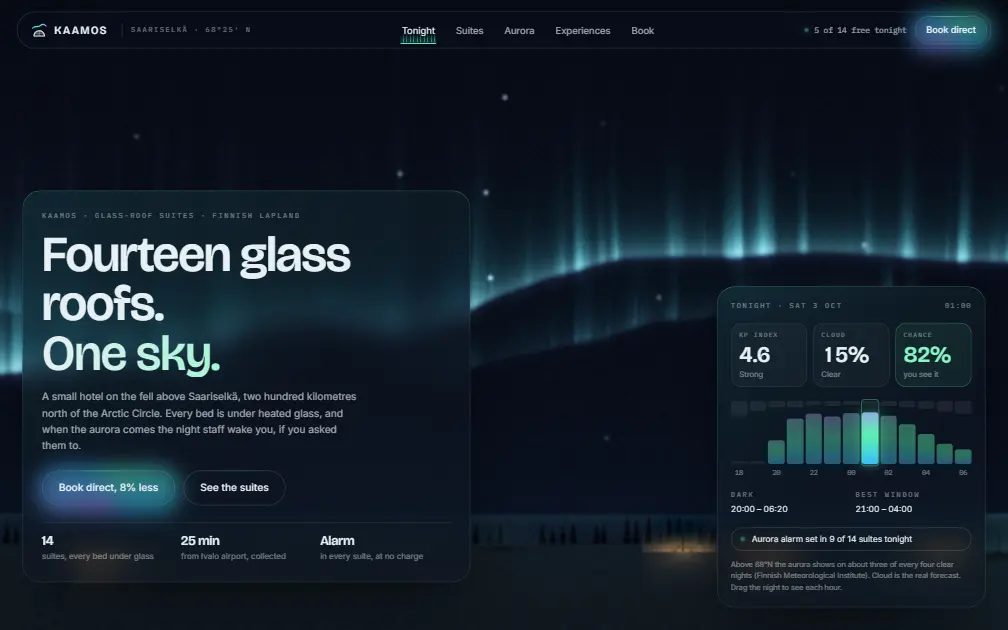
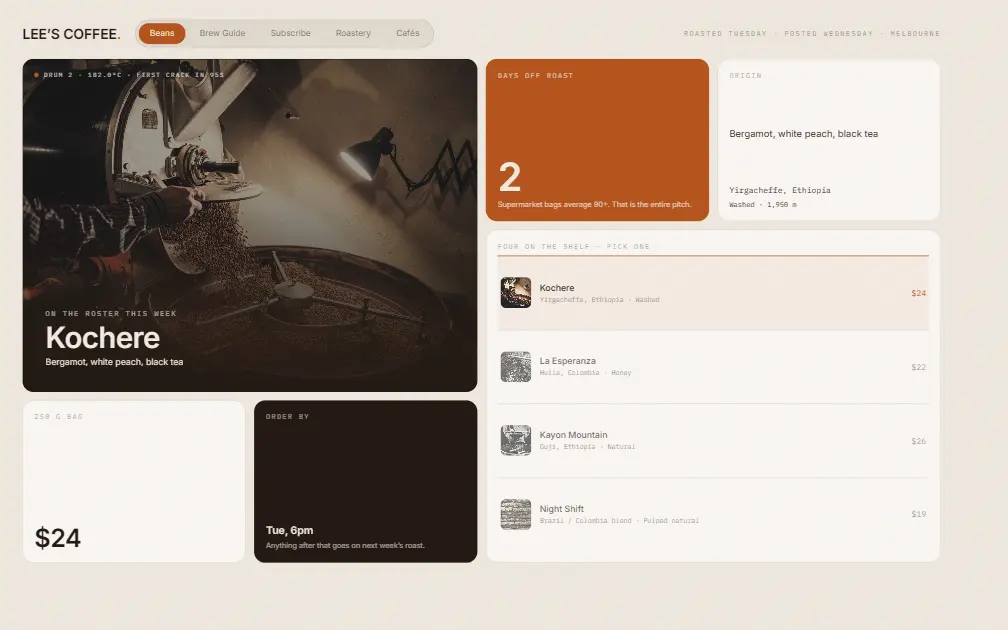
The example: SEVEN AT EIGHT, a restaurant in Tokyo
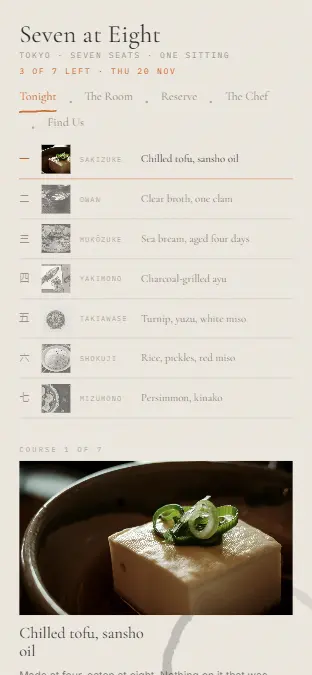
SEVEN AT EIGHT is a restaurant in Tokyo we invented to show what we build for this trade — every page above works. Wabi-sabi · ink wash · negative space.
What a fine dining website has to do
A guest about to spend a few hundred on dinner does their homework. They read the menu, look at the room, find out who is cooking and check whether there is a seat on the night they want. Fine dining website design is built for that half hour of reading. It has to make the meal feel worth the money, then hand over a seat without a phone call.
Most fine dining restaurant websites manage the first half and drop the second. The menu is last season’s PDF. Booking jumps to a platform that lists you beside a dozen rivals and often charges per cover. The cancellation terms sit in small print nobody reads, so a no-show on Friday is a seat you have already bought the fish for.
So we build for scarcity. Tonight’s menu set out course by course, and easy to change in the afternoon. The room and the chef, shown with the same restraint as the cooking. Seats sold night by night against your real availability, with the terms stated up front, a deposit if you take one, and a reminder before the evening. SEVEN AT EIGHT, above, is the example: seven seats, one sitting, eight o’clock.
28% of US diners missed a reservation without cancelling in the past year; restaurant staff put the cost of an empty table for two at $80 on average.
Source: OpenTable US Restaurant Impact Report, 2026 (n=1,501)47% of diners say knowing what a no-show costs the restaurant would make them more likely to turn up or cancel properly.
Source: OpenTable US Restaurant Impact Report, 2026
- 01
A menu you can change before service
Course by course, each plate with what it is and where it came from, set as real text so it reads on a phone and Google can index it. Change a course at four and it is live by six.
- 02
The room, before they book
People paying for an evening want to know where they will sit and how long it runs. Show the counter, the light and the pace, so the right guests book and the wrong ones choose another night.
- 03
Scarcity, shown honestly
Every night shows how many seats are left, and full nights cannot be chosen. A guest picks a night and a party size, sees the total before committing, and holds the seats in a few taps.
- 04
A waiting list for full nights
A sold-out night is still demand. A waiting list takes a party size and an email, and when a seat comes back the first name on the list hears first, instead of whoever happens to ring.
- 05
A chef worth booking for
The person cooking is often the reason people book. Give them a page: where they trained, what the menu is built around each season, and why the room is the size it is.
- 06
Terms and directions before the night
Cancellation terms written where guests actually read them, when to arrive, and how to find the door from the station, step by step. Fewer no-shows, fewer late arrivals, fewer calls during prep.
The example, page by page
01Tonight
Seven courses in order, each with its dish and a line on how it is made. Hover or tap a course to bring up the plate. One price for the whole menu, no choices.
02The Room
The spaces a guest passes on the way in, a drawn plan of the seven-seat counter, and the facts that matter: one sitting at eight, two and a half hours, no music.
03Reserve
Five nights, each showing the seats already taken. Pick a night and a party size on the drawn counter, see the total, and hold the seats. A full night cannot be picked.
04The Chef
Who cooks, where he trained and why the counter stops at seven. Pick a season to see the one ingredient that season’s menu is built around, drawn in ink.
05Find Us
The address, the sitting times, the late-cancellation terms and a five-step walk from the station, drawn as a map that inks itself as you go. The lamp lights at the door.
Seven seats, every night
Built to move every seat, every night, without the phone. Showing real availability ends the back-and-forth, and a reminder the day before is what keeps seven seats full.
How we build it
- Day 1
The service
Menu structure, covers, sittings and your cancellation terms are set, along with the reservation system you already use.
- Days 2–5
The room on screen
Type, photography and pacing designed to feel like the meal: quiet, considered and unhurried, on a phone first.
- Days 6–8
The seats
Availability goes live, deposits and reminders are switched on and the confirmation emails are written in your voice. Then launch.
What a fine dining website costs
From $2,600
5–8 days to live · fixed price, agreed before we start · branding included
What moves the price
- How many rooms, sittings or menus you run
- Deposits, card holds or prepaid tickets
- Gift vouchers and private dining enquiries
- A second language for the menu and booking
After launch, hosting, uptime, security and monthly reporting run from $250 a month: a monthly retainer, never a contract term.
Questions we get asked
How much does fine dining website design cost?+
From $2,600, fixed and agreed before we start. That covers the design, every page, reservations connected to the system you use, branding and two rounds of revisions. The price moves with how many rooms, sittings or menus you run, whether you take deposits or sell prepaid tickets, gift vouchers and private dining, and whether the site needs a second language.
How long does it take?+
Five to eight days from the first call to live. Day one sets the menu, covers, sittings and terms. The middle days are design. The last are availability, deposits and the confirmation and reminder emails, tested against a real service before launch. The timeline depends on how quickly you send feedback and the menu copy, so it can move a day or two.
Will it work with OpenTable, Resy, Tock or SevenRooms?+
Yes. Keep the reservation system you run service on, with its floor plan, guest notes and history. We connect the site to it, so guests book in your own pages rather than on a listing beside your competitors. Most of these systems can take a deposit or a prepayment, and the site explains the terms before the guest reaches that step.
Can we change the menu ourselves?+
Yes, and it is built for exactly that. The menu is text, course by course, not a PDF, so the kitchen can swap a course in the afternoon from a phone and it is live before service. A tasting menu website that still shows last month’s dessert costs you trust. One that changes with the market makes people want to book again.
How does the site help with no-shows?+
By putting the terms in front of guests before they book, and by letting your reservation system do the rest: a deposit, a card hold or a prepaid ticket, and a reminder a day or two before. The example states its terms on Find Us: cancel free until three days before, after that the seat is charged, because the fish has already been bought.
Is SEVEN AT EIGHT a real restaurant?+
No. SEVEN AT EIGHT is an omakase counter in Tokyo we invented to show what we build for fine dining. The chef, the menu and the address are made up. Every page works: choose a course, pick a season, walk to the door, and hold seats on a night. Nothing you enter is sent anywhere. On your site, the same flow books into your real reservation system.
Do you also build for wine bars, tasting rooms and chef’s counters?+
Yes. Anywhere with limited covers and a menu that changes often fits this kind of site: a chef’s counter, a twelve-seat wine bar, a hotel dining room. Luxury restaurant website design is mostly restraint plus booking that works, whatever the size. If you run a busier place with walk-ins, takeaway and delivery, our restaurant website design page is the closer match.
Do we need our own website if we are listed on the booking platforms?+
The platforms are good at filling tables, but they sell their network, not your room. Your own site is where the meal, the chef and the terms are told your way, in your voice and your photographs. It is also where a guest who has already chosen you books without being shown three alternatives on the way to a seat.