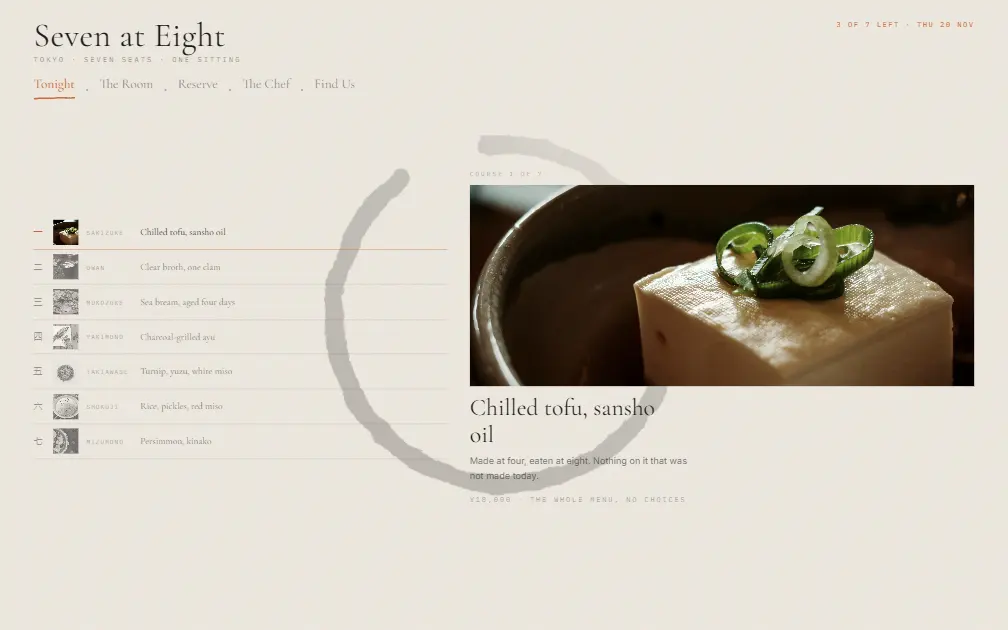
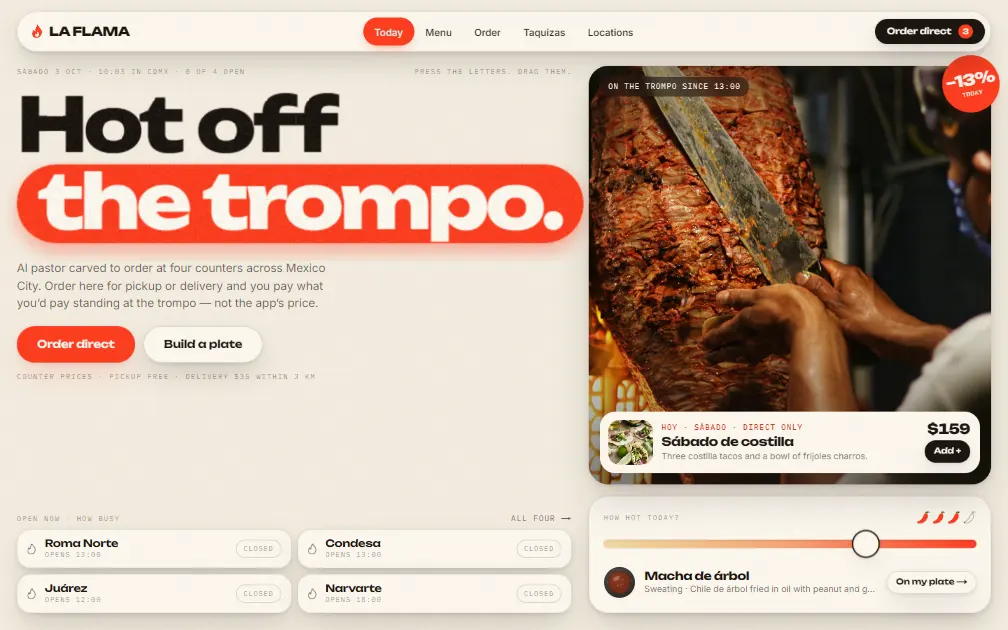
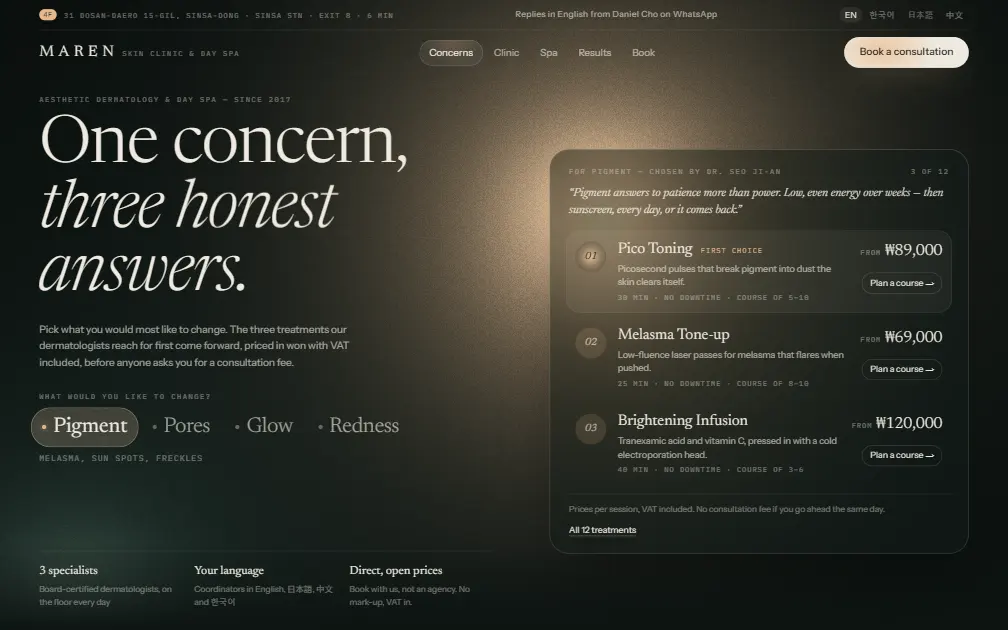
The example: KAAMOS, a glass-roof hotel in Lapland
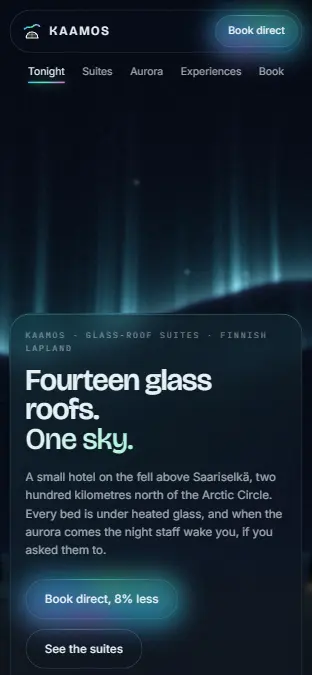
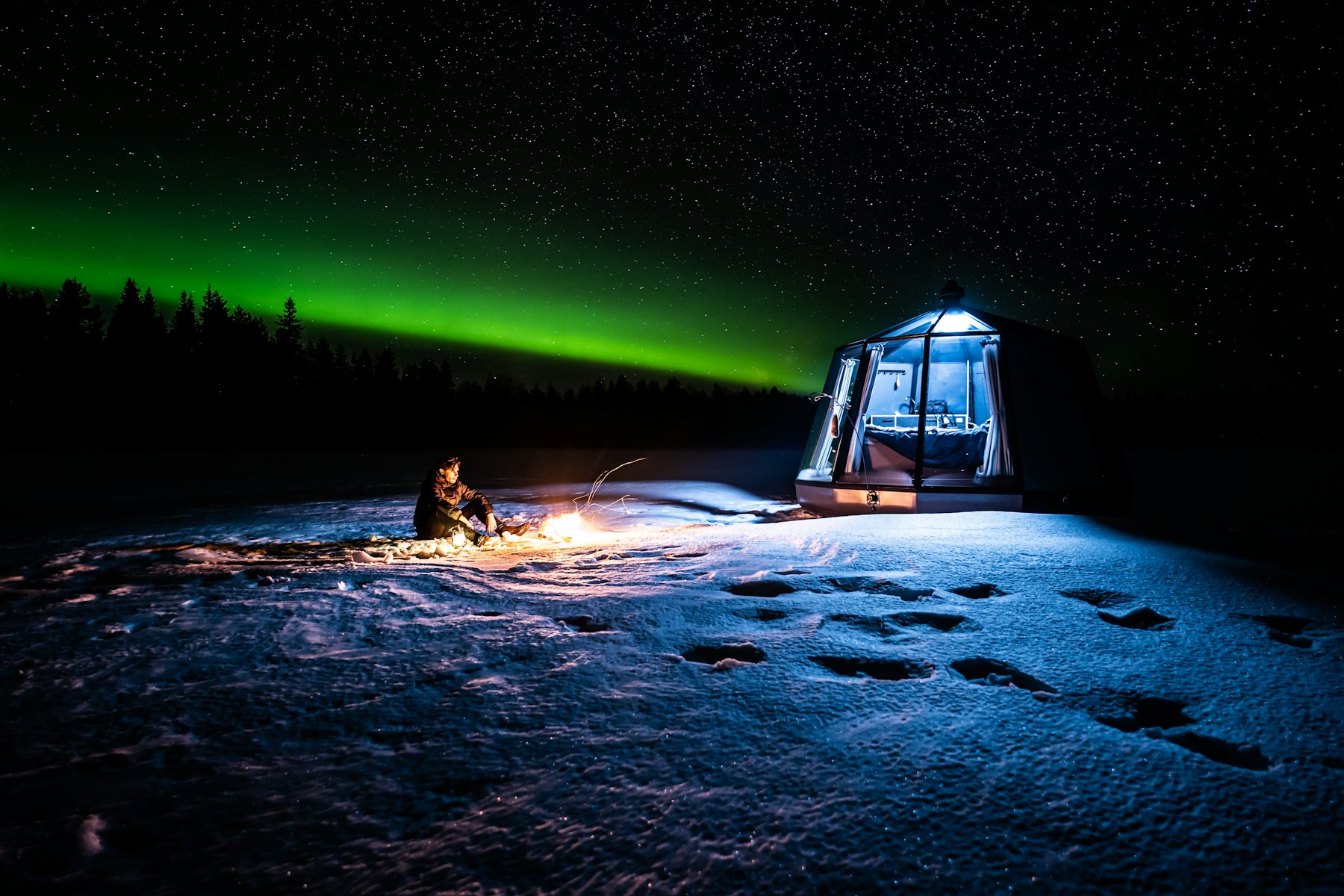
KAAMOS is a glass-roof hotel in Lapland we invented to show what we build for this trade — every page above works. Aurora · a live light curtain over a dark sky.
What a hotel website has to do
Guests find a hotel on the booking sites, then come to its website to see what the place is really like. If the site is a slideshow and a “book now” button that drops them into a clunky engine, they go back to the booking site to pay, and the hotel pays the commission on a guest it had already won.
A hotel website has to do what the booking sites cannot: show the stay, not just the room; price the extras into it; explain the season honestly; and make booking direct quicker, clearer and cheaper than the alternative, with the saving said out loud.
That is what we build for boutique hotels, lodges and resorts. KAAMOS, above, is the example: a glass-roof hotel in Lapland whose site draws tonight’s sky live on the first screen, shows each suite under its own roof, adds experiences to the stay with a running total, and books direct.
Across 90 million bookings, online travel agencies took 63.4% of independent hotels’ bookings in 2025, and their cancellation rate was 21.8% against 10.6% for direct bookings.
Source: Cloudbeds 2026 Independent Hotels Report, via Hotel BusinessIn northern Lapland, three clear nights out of four have northern lights.
Source: Finnish Meteorological Institute
- 01
The reason to come, on the first screen
Not a stock photograph: the thing your guests travel for, shown as it is tonight. For KAAMOS that is the sky.
- 02
Rooms with real availability
Each room or suite with what it is like to wake up in, its rate for the dates the guest has in mind, and whether it is free.
- 03
The season, explained honestly
When to come, what to expect and what can go wrong, said plainly. Guests who knew what they were booking leave better reviews.
- 04
Experiences priced into the stay
Dinners, excursions and transfers added while the guest is still choosing dates, with the total updating, instead of an upsell email after they have paid.
- 05
Direct booking that says why
The booking shows what booking direct saves or adds — a better rate, a late checkout, free cancellation — so the guest has a reason to stay on your site to pay.
- 06
Content you change with the seasons
Rates, packages and photographs change through the year. You edit them yourself, without waiting on a developer.
The example, page by page
01Tonight
Tonight’s sky drawn live as a curtain of light, the way guests see it through the roof.
02Suites
Each suite seen under its own glass roof, with what it holds and what it costs.
03Aurora
The season month by month, what the odds are, and the night alarm that wakes guests when the lights come.
04Experiences
Experiences you add to the stay, with the total for the whole trip updating as you choose.
05Book
Direct booking that shows, line by line, what booking here saves against the booking sites.
Direct bookings, not commission
Built to move bookings off the commission sites and onto the hotel’s own. Direct guests cancel less, and every add-on sold on the way through is margin a booking site never sees.
How we build it
- Days 1–4
Your hotel
Rooms, rates, seasons, packages and the booking engine you use or will use.
- Days 5–14
The pages
The first screen, the rooms, the photography and every page designed and tuned for phones, where most guests look.
- Days 15–21
Live
Booking, add-ons and payments connected, tested on real dates, and launched.
What a hotel website costs
$6,400–$9,000
18–21 days to live · fixed price, agreed before we start · branding included
What moves the price
- How many room types and packages
- The booking engine and payments connected
- Experiences and add-ons priced into the stay
- More than one language
After launch, hosting, uptime, security and monthly reporting run from $250 a month: a monthly retainer, never a contract term.
The live sky on KAAMOS’s first screen is part of what sets it at the top of the range. Your first screen is designed around what your guests come for.
Questions we get asked
How much does a hotel website cost?+
Ours run from $6,400 to $9,000, fixed and agreed before we start. The range is set by how many room types and packages there are, how the booking engine and payments connect, and how many languages the site speaks.
How long does it take?+
Eighteen to twenty-one days from the first call to live, including testing the booking on real dates before launch.
Do we have to change our booking engine?+
No. We design the booking around the engine you already use where it allows it, so rates and availability stay in one place. If you do not have one yet, we will tell you what to look for and connect the one you choose.
Will it really move bookings off the booking sites?+
It gives guests a reason to book with you: the stay shown properly, the extras priced in, and the saving said plainly. You will still sell through the booking sites; the point is that guests who reach your own site finish there.
Can we change rates and packages ourselves?+
Yes. Rates come from your booking engine, and packages, experiences and photographs are yours to edit as the seasons turn.
Is KAAMOS a real hotel?+
No. KAAMOS is a glass-roof hotel in Lapland we invented to show what we build for hotels. The pages and the sky work as a design you can try; the rates, availability and payments are what we connect to your hotel at build.