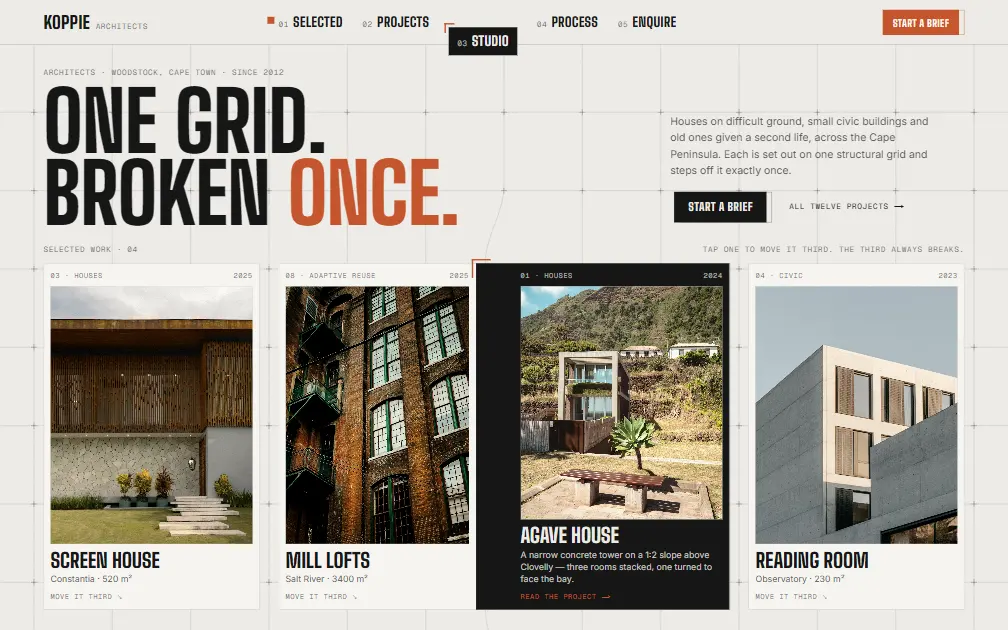
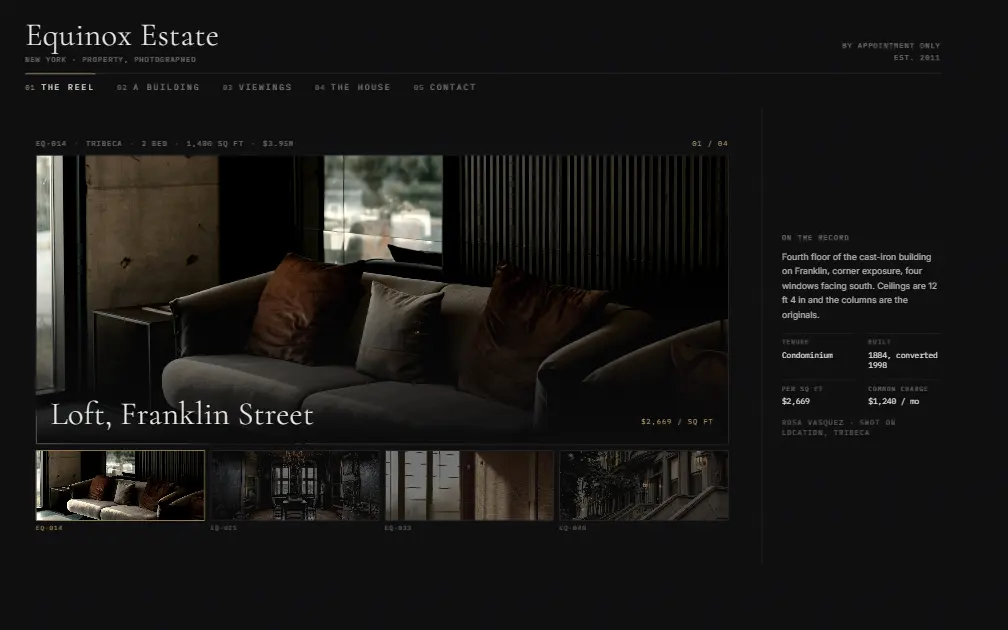
The example: CALDER ROE, a law firm in Dublin
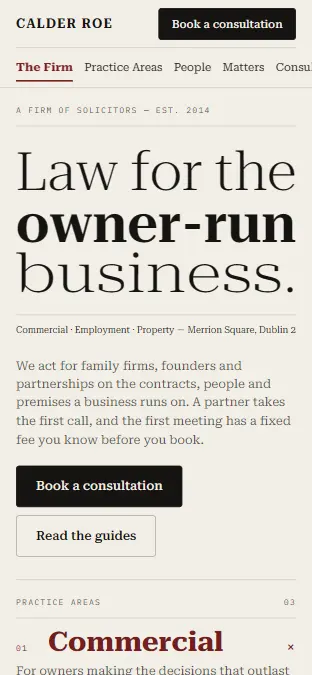
CALDER ROE is a law firm in Dublin we invented to show what we build for this trade — every page above works. Kinetic type · weight as motion, type as the interface.
What a law firm website has to do
Clients rarely know what kind of lawyer they need. They know their landlord has stopped answering, or a contract went wrong, or a business partner wants out. A law firm site that lists “practice areas” in the firm’s own vocabulary and ends with a general contact form makes them work out the law before they can ask for help, and the enquiry that does arrive has to be untangled on a first call.
A law firm website has a few jobs: say what the firm does in the client’s words, explain the common problems plainly enough to build trust, show the people who will do the work and the matters they have done, and turn an enquiry into an intake the right lawyer can act on — with a clear note about confidentiality before anything is sent.
That is what we build for law firms, solicitors and advisory practices. CALDER ROE, above, is the example: a Dublin firm with no photographs at all, whose practice areas open into plain-language guides, whose partners are listed with their matters, and whose consultation booking asks the questions that tell the right person what the call is about.
Nearly nine in ten people with a legal problem visit at least two law firm websites before contacting a lawyer.
Source: FindLaw Consumer Legal Needs Survey, 2024 (n=2,000)When 500 law firms were emailed as prospective clients, only 33% replied, down from 40% in 2019.
Source: Clio Legal Trends Report, 2024Only 30% of law firm websites explain how to hire the firm, and 14% show any pricing.
Source: Clio Legal Trends Report, 2024
- 01
The firm, said plainly
What you do, for whom, and how you charge, on the first screen. Clients choose a firm they understand.
- 02
Guides in the client’s words
Each practice area opens into plain-language guides to the problems clients actually bring, written to be found when they search for them.
- 03
The people who do the work
Every partner and solicitor with what they handle and the matters they have worked on, so the client knows who they will be speaking to.
- 04
Matters that show the range
Representative matters, anonymised and sorted by area, so a client can see the firm has handled one like theirs.
- 05
Intake that routes itself
The consultation request asks the area, the urgency and the other side, so it reaches the right lawyer ready for the first call.
- 06
Confidentiality, said up front
A clear note that nothing confidential should be sent before the conflict check, and a fixed price for the first meeting.
The example, page by page
01The Firm
The firm in moving type and no photographs: what it does, for whom, and what a first meeting costs.
02Practice Areas
Practice areas, each opening to plain-language guides to the problems clients bring.
03People
Every partner and solicitor with their areas and the matters they have worked on.
04Matters
Representative matters by area, each linked to the guide for that kind of problem.
05Consultation
A consultation booking whose intake form tells the right person what the call is about, with the conflict-check note before you send.
Consultations that arrive qualified
Built so that enquiries arrive qualified. A recommendation that lands on a considered site becomes a booked consultation, and the intake form means the first call starts with the facts, not the paperwork.
How we build it
- Days 1–3
Your practice
Practice areas, people, matters you can describe, and the intake questions each area needs answered.
- Days 4–11
The pages
The type system and every page designed around it, with the first guides written with your lawyers.
- Days 12–16
Live
Consultation booking, intake routing and publishing connected, tested, and launched.
What a law firm website costs
$4,600–$6,800
13–16 days to live · fixed price, agreed before we start · branding included
What moves the price
- How many practice areas and people
- Plain-language guides written with you
- Intake routing to the right lawyer
- Booking and payment for first meetings
After launch, hosting, uptime, security and monthly reporting run from $250 a month: a monthly retainer, never a contract term.
Questions we get asked
How much does a law firm website cost?+
Ours run from $4,600 to $6,800, fixed and agreed before we start. The range is set by how many practice areas and people there are, how many guides we write with you, and how intake and booking connect to your systems.
How long does it take?+
Thirteen to sixteen days from the first call to live. The time your lawyers give us is about two hours in the first week and a read-through before launch.
Will the site follow our professional conduct rules?+
We write to the rules your regulator sets on advertising, testimonials and fees, and every word goes past you before launch. You stay responsible for what the firm publishes; we make it easy to get right.
Do the guides help us rank?+
They are the pages most likely to. Clients search for their problem, not for a practice area, and a guide written in their words answers that search directly.
Can intake connect to our practice management system?+
Usually, yes. Consultation requests go to the right lawyer by area and into the system your firm already uses, wherever it allows it; otherwise they arrive by email in a set format.
Is CALDER ROE a real firm?+
No. CALDER ROE is a Dublin firm we invented to show what we build for law firms. Every page works as a design you can try; the booking, the intake routing and the publishing are what we connect to your firm at build.